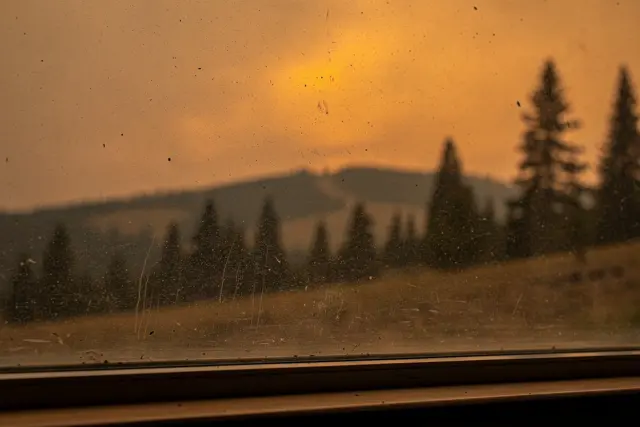
Wildfire smoke and your windows
Smoke leaves ash and soot on glass and screens. How to clean it off without scratching the glass or breathing it in, and when to wait.
Learn
Dust costs less here than in the desert Southwest, and snow costs more. When cleaning is worth it, and how the panel makers say to do it.
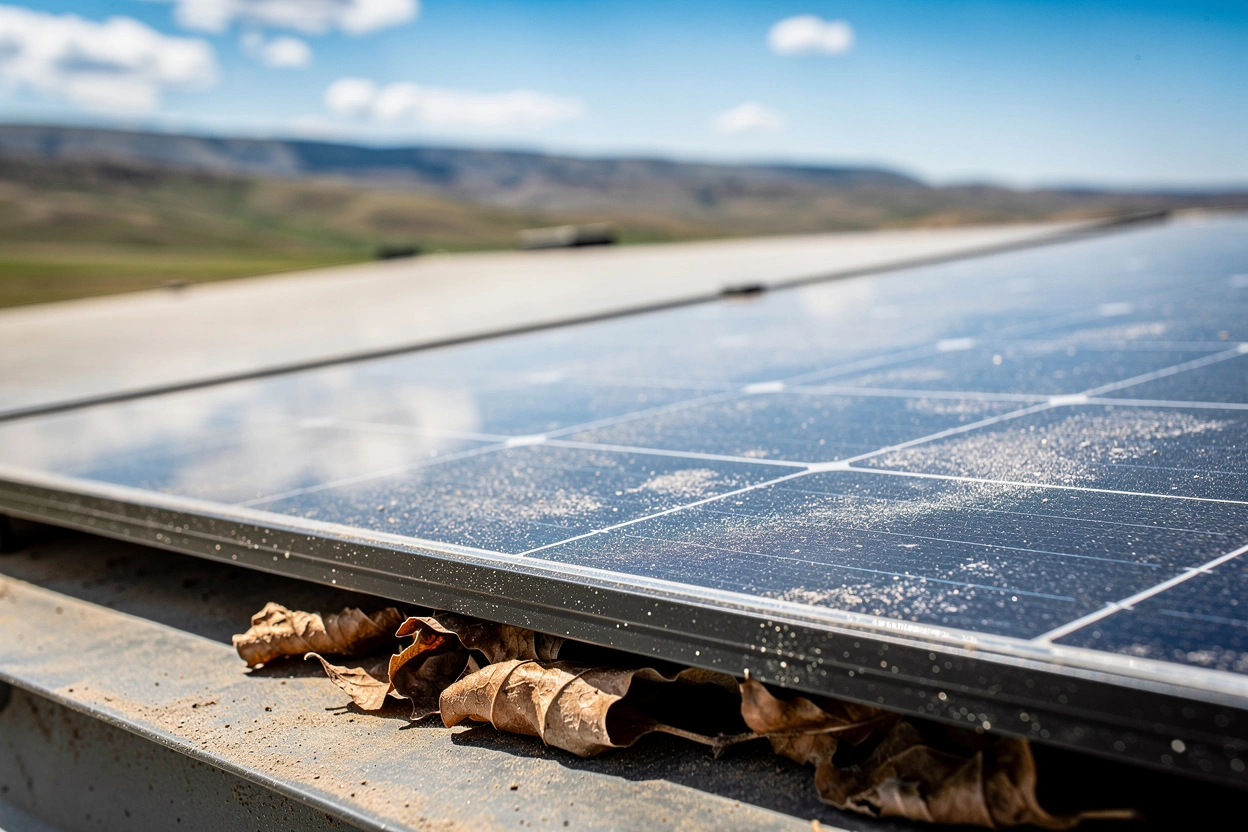
Less than people fear, in most places. A study of 186 solar systems across California found dust cost them about 0.05% of their output a day on average through the dry season: roughly 7.4% by the end of a 145-day drought. A good rain reset them.
California’s dry season is long. Mapping of solar sites across the country found most of the soiling happens in the Southwest, and NREL’s standard solar calculator assumes a 2% loss a year to dirt unless you tell it otherwise. Here, where spring and summer bring rain, a well-tilted array gets rinsed regularly.
Even dust dims a panel a little. Patchy build-up can do more: a bird dropping, a drift of leaves or a caked corner shading part of a cell. The International Energy Agency’s solar programme warns that uneven, localized soiling such as bird droppings “can lead to hot-spot effects on PV modules,” with risks that include cracked glass or cells and a melted backsheet.
Canadian Solar’s installation manual says shaded cells “can cause localized overheating, which in turn may negatively impact the module service lifetime,” and that a hot spot caused by poor maintenance voids its warranty.
That is the case for clearing droppings and debris before they sit for long, gently and the way the makers specify. It is not a reason to scrub a dusty array every month.
In Montana the bigger winter loss is snow sitting on the panels. NREL modeled it for cities across the country:
| City | Panels at a 20° tilt | Panels tilted at the latitude |
|---|---|---|
| Missoula | 4.9% | 4.0% |
| Helena | 6.3% | 5.5% |
| Billings | 7.7% | 6.7% |
| Great Falls | 7.9% | 7.2% |
| Lewistown | 10.0% | 8.5% |
Even so, the panel makers are relaxed about it. REC says clearing snow is “not essential,” Qcells says to remove it only without force, with a very soft broom, and Maxeon strongly recommends homeowners stay off the roof. A December array makes little power either way.
Their manuals agree on the essentials: cool panels, clean water low in minerals, a soft brush, and nothing else. REC names pressure and steam cleaners, high-pressure hoses, knives, blades and metal sponges as things that will invalidate the warranty. Canadian Solar says damage from the wrong cleaning voids its warranty, and rules out dry scraping. Qcells does not cover cleaning damage, and says not to clean with water when there is a risk of frost.
If your panels are on a roof, the safest cleaning is one you do not do yourself.
Learn
Smoke leaves ash and soot on glass and screens. How to clean it off without scratching the glass or breathing it in, and when to wait.
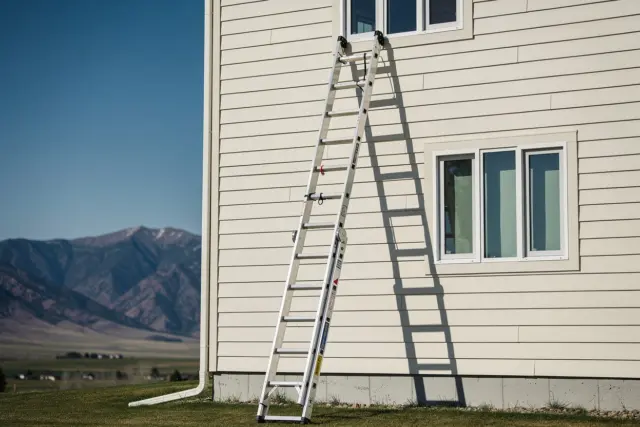
How many people are hurt on ladders each year, the setup rules that stop the most common fall, and when the upper floor is a job to hand over.
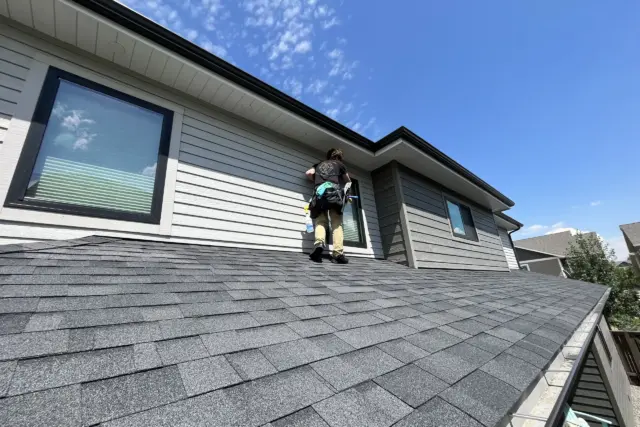
Five questions that separate a window cleaner you will call again from one you will regret: insurance, what is included, pricing, care of the glass, and payment.
Send a couple of photos for a ballpark, usually back the same day. The quote is free.
Quick quote
Leave your name and number and we will get back to you with a quote. No obligation.